Laura Winkler Moreno Twose
Children with complex communication needs who are unable to speak—or who can only produce limited sounds or words—often rely on augmentative and alternative communication (AAC).
A common AAC tool is a speech-generating device, also known as a speech machine. These are typically tablets that produce synthetic speech from typed words or symbols. For many children, this becomes their primary means of expression and the voice through which they are recognized in school, daycare, and social life.
In Denmark, most children using speech machines are given adult voices to communicate with, often sounding like a 40-year-old man or woman. In some cases, these voices are artificially pitched to sound more child-like, but they are still based on adult voice models. No Danish child voice has been developed from real child speech data.
Child voices are already available for speech-generating devices in languages closely related to Danish, such as Swedish and Norwegian.
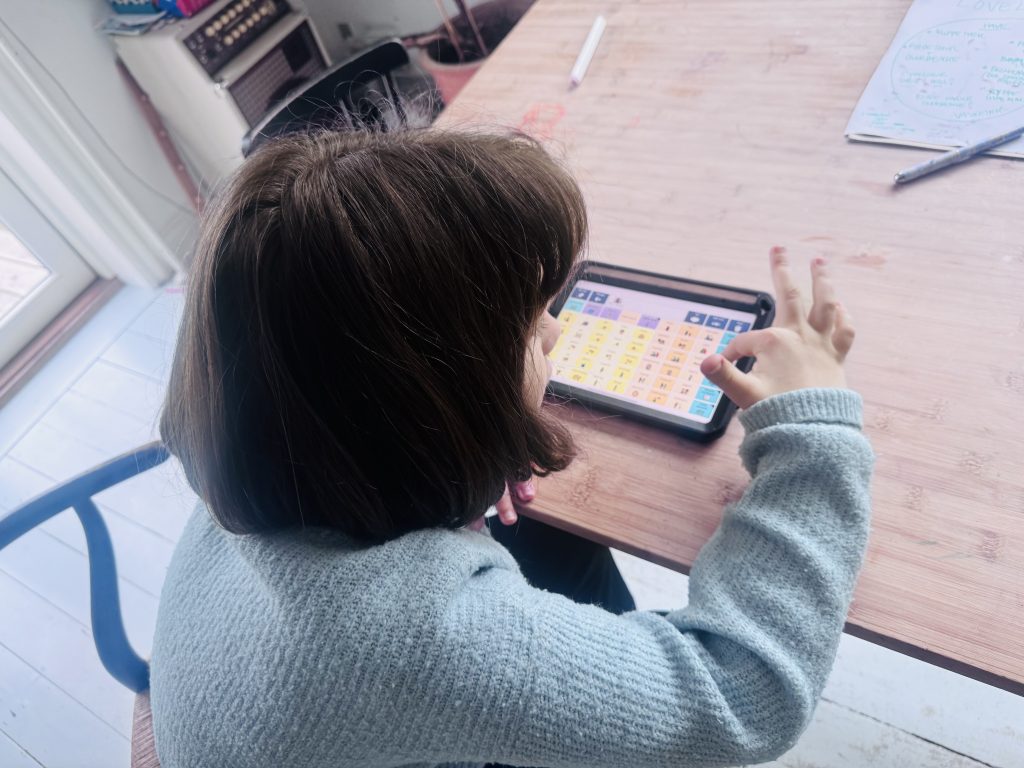
When a Child Doesn’t Sound Like a Child
Project description
This project, based at AIR Lab, investigates how voice, identity, and technology intersect for children who use speech-generating devices—specifically, the implications of children communicating through adult voices.
Understanding the effects of adult voices
The first phase is based on empirical research exploring how adult synthetic voices function within the child’s care collective (family, educators, and professionals), and how human–technology relations emerge when a child’s voice does not sound like a child.
(This paper is currently under peer review for Audiologopædisk Tidsskrift.)
Exploring AI-generated voices
The second phase examines how more dynamic and customizable voices, generated through artificial intelligence (e.g., ElevenLabs), function in practice when integrated into children’s speech-generating devices.
(This study is currently ongoing.)
Vision
The project has contributed to public debate, including a published opinion piece in Information (February 10, 2026), arguing for children’s right to sound like children when using speech-generating devices (https://www.information.dk/debat/2026/02/boern-ret-lyde-boern-ogsaa-naar-kommunikerer-hjaelp-teknologi).
Together with Jonas Fritsch, we aim to make a Danish child voice a reality. This includes ongoing collaboration with relevant partners and continued work toward developing age-appropriate, identity-supporting voices for children using speech-generating devices in Denmark.
Project member
Laura Winkler Moreno Twose
Junior Researcher, AIR Lab
Date: September, 2025 – ongoing